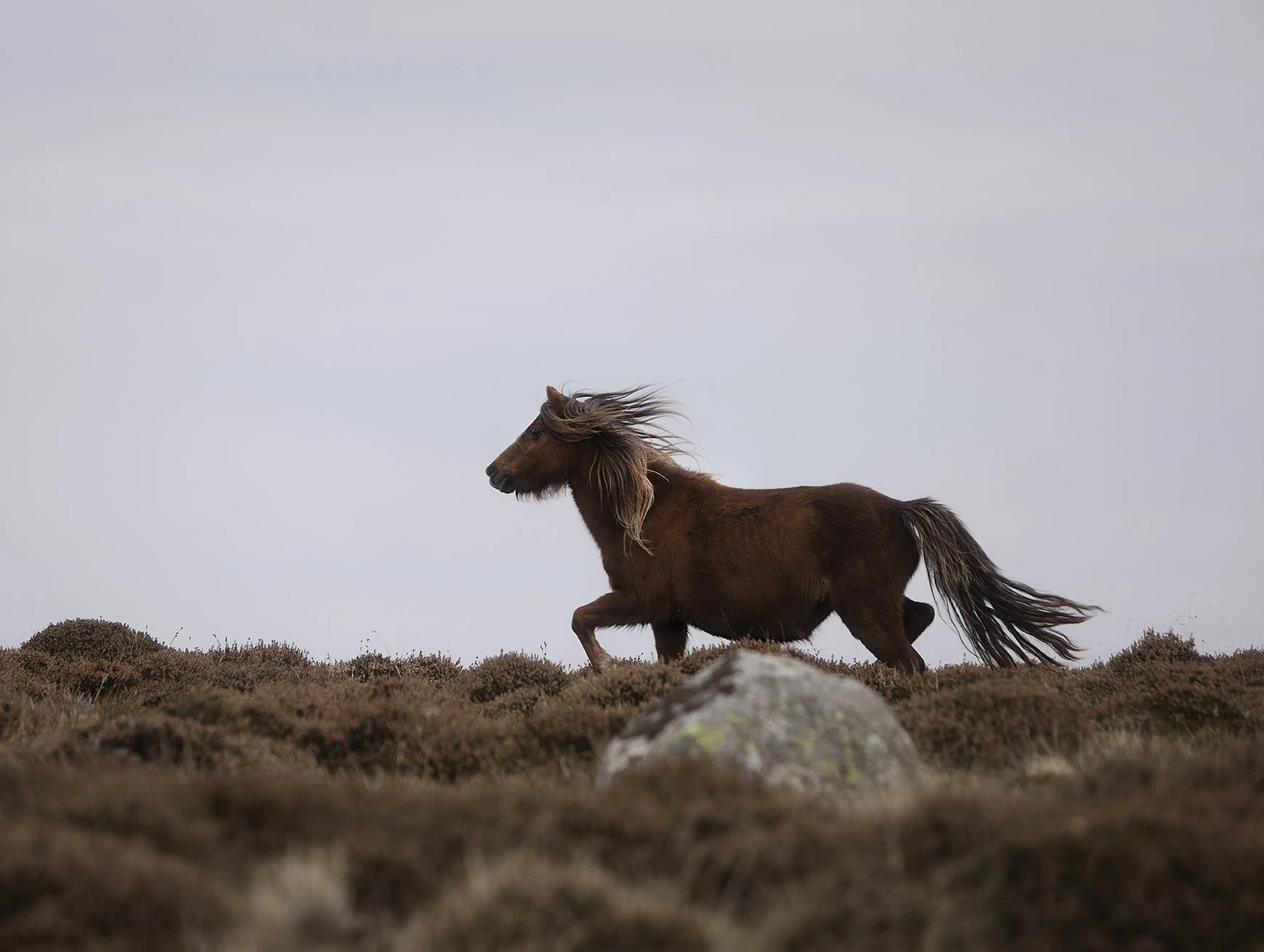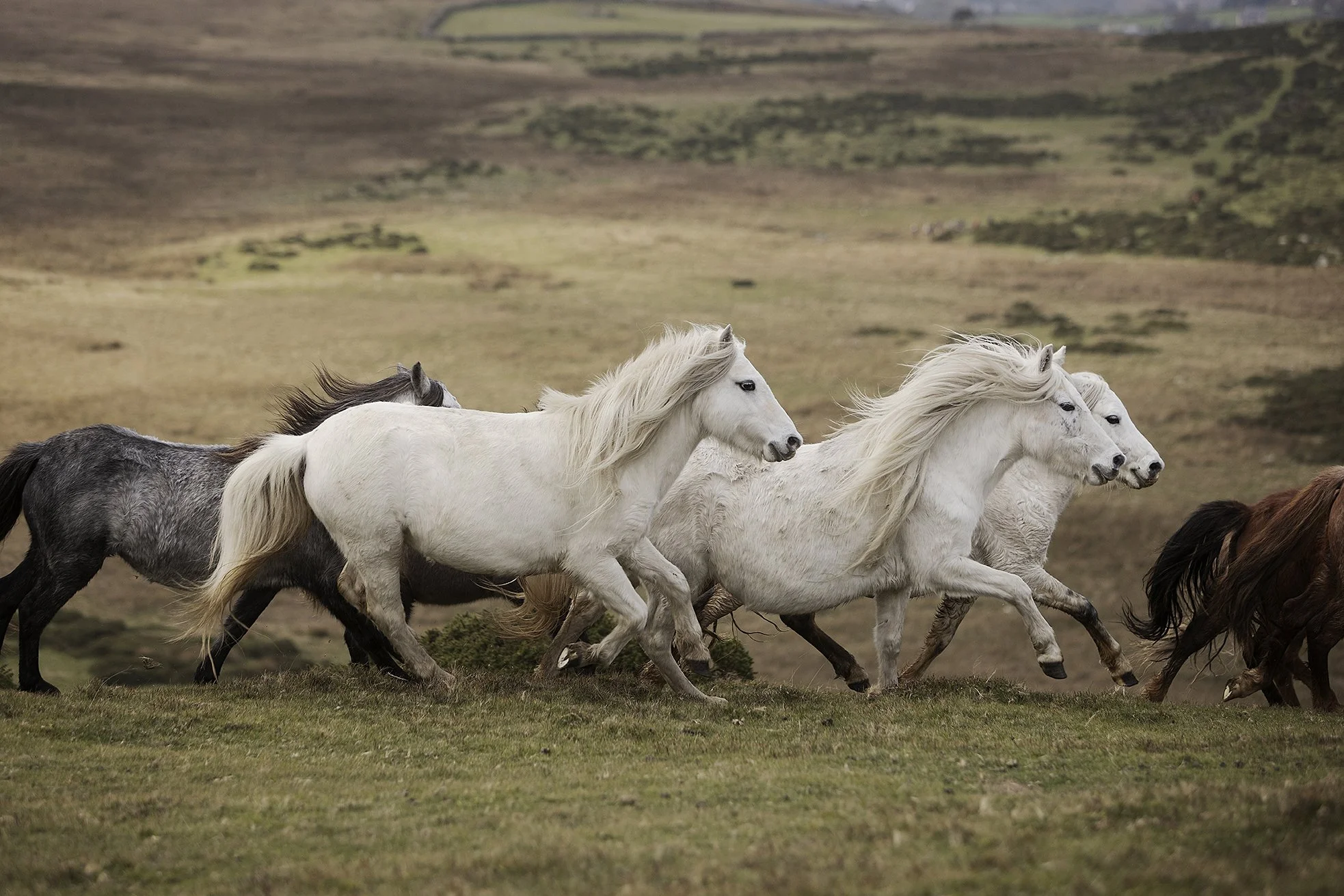
Semi Feral Carneddau Ponies
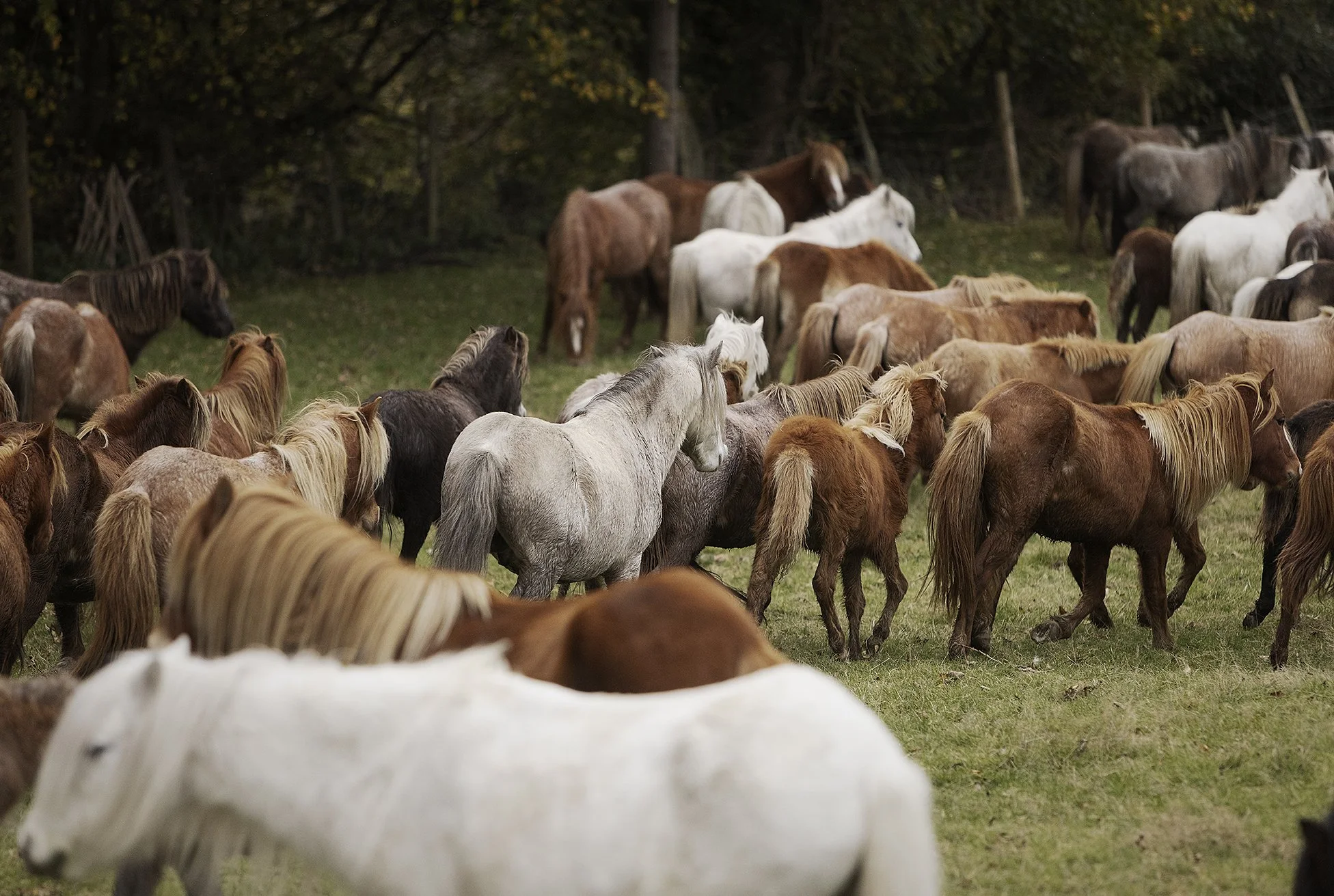
Every autumn, the Carneddau ponies are gathered down from the mountain above Llanfairfechan.
It is a day that feels both practical and quietly moving. Practical, because it is part of the rhythm of hill farming, a chance to check the herd, to care for the ponies, to make sure the balance between land and animals is being held. Moving, because standing on those slopes in the open air, with the whole of Eryri stretched around you, you are witnessing something rare: one of Britain’s last remaining semi-feral pony herds, living close to the land in a way that feels older than most of the words we use to describe it.
I have stood at the gathering more than once now, first while making Wild Hearts and then again this autumn. Each time I come away changed in some small way. Not because the day is dramatic in the obvious sense, but because the ponies are not. They are watchful, steady and completely themselves. There is something deeply moving about that.
A herd with deep roots
The Carneddau ponies live high on the mountains, grazing the rough grasses, rushes, gorse and upland vegetation that grow there. They are not fed or stabled. They are semi-feral ponies, shaped by weather, ground and the long care of the farming families who have looked after them for generations.
Local people will tell you these ponies have been on the Carneddau since Celtic times. Some believe they were here in the Roman era too, and that they are a living link to the old Welsh mountain pony. No one can prove they have roamed unchanged since the Iron Age, but the mountain has kept them a very long time.
That sense of continuity matters to me. Not as a romantic story told from a distance, but as a living reality. These ponies have survived because people chose to keep them.
Why the Carneddau ponies matter
What sets the Carneddau ponies apart from almost any other herd is that they choose their own mates. No one decides which stallion runs with which mare. They live and breed on the mountain in their own way, which is part of what makes them so distinctive.
They are also one of the few herds still living in a truly semi-feral state in Britain. That makes them important not only as animals, but as part of our living horse heritage. They are small, hardy, intelligent and able to live on very little. They are shaped by the mountain, but they also shape it in return.
For me, that is what makes them so compelling to photograph. Not simply that they are beautiful, though they are. It is that they carry a whole way of being with them — one that feels older, quieter and more rooted than so much of the world around us.
Photographing them in the mountain light
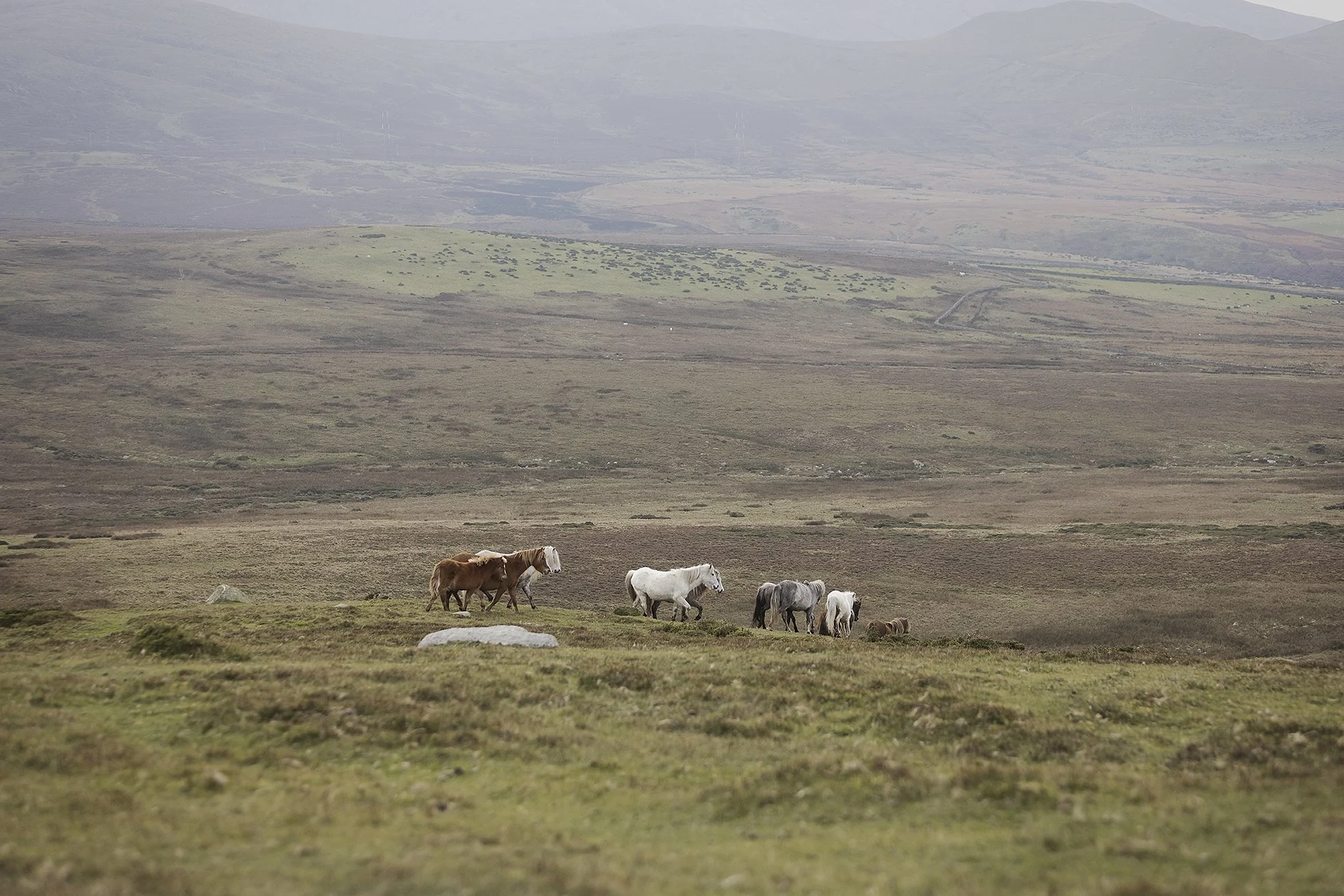
Photographing the Carneddau ponies is never about directing or arranging. You do not ask them to become anything. You wait, you watch, and you let the landscape speak as much as the animals do.
That is one of the reasons I am drawn to photographing semi-wild breeds. They ask for patience. They ask for respect. They ask you to pay attention to what is already there.
Up on the mountain, the ponies can seem to melt into the landscape — their coats and long manes echoing the browns, greys and muted golds of the hills around them. Then one will lift its head, or turn into the light, or stand still against the weather in a way that suddenly draws your eye. Those are the moments I am always looking for: not poses, but presence.
The day of the gathering this autumn was cold and crisp, with clear air and long views in every direction. I never tire of being up there. From a distance, the Carneddau can feel vast and unforgiving. Up close, the ponies bring a different kind of intimacy to it. They anchor the scale of the place. They remind you that the mountain is not empty. It is lived in.
Why I keep returning
I keep returning because I want to bear witness.
These ponies are part of a story that is still unfolding, and not an easy one. There are pressures on the land, on the people who care for the herd, and on the future of these animals themselves. There are questions about grazing, conservation, inheritance and what it means to protect a living herd without flattening what makes it special.
Those conversations matter. But when I stand on the mountain, I always come back to the same feeling: that these ponies deserve to be seen clearly, and carefully, while they are still here.
That is true of the Carneddau ponies, and of other British native pony breeds too. They are not just part of the landscape in a picturesque sense. They are part of a living relationship between animal, land and people. If we lose that, we lose something much harder to replace than an image.
A wider family of rare native breeds
My love of photographing semi-feral ponies comes from that same place. I am drawn to animals that have remained close to the land, ponies whose lives are shaped by weather, grass, ground and instinct. Whether I am photographing the Carneddau ponies, another rare native breed, or a horse in an exposed and open place, what interests me is the same: how an animal belongs to its environment, and how the environment shapes the animal in return.
That is what I hope comes through in my work. Not simply the look of the pony, but its relationship to place. Not just beauty, but belonging.
Why this story matters
I think people are moved by these ponies because they remind us of something we feel we are losing.
There is comfort in that, but also urgency. The Carneddau ponies are not a symbol. They are real animals, living on real ground, dependent on real people making difficult decisions year after year. Their story is one of survival, stewardship and care. It is also a story about what we choose to value.
That is why the gathering matters to me. It is not only a practical event. It is a reminder that these ponies are still here, still being looked after, still part of the mountain’s life.
And perhaps that is why I keep going back to photograph them. To witness. To remember. To hold on to the feeling that something precious is still here, even if only just.
Explore the work
If you feel drawn to Britain’s rare native pony breeds, wild places, and quiet stories like this one, you can explore my wider photographic work here: