
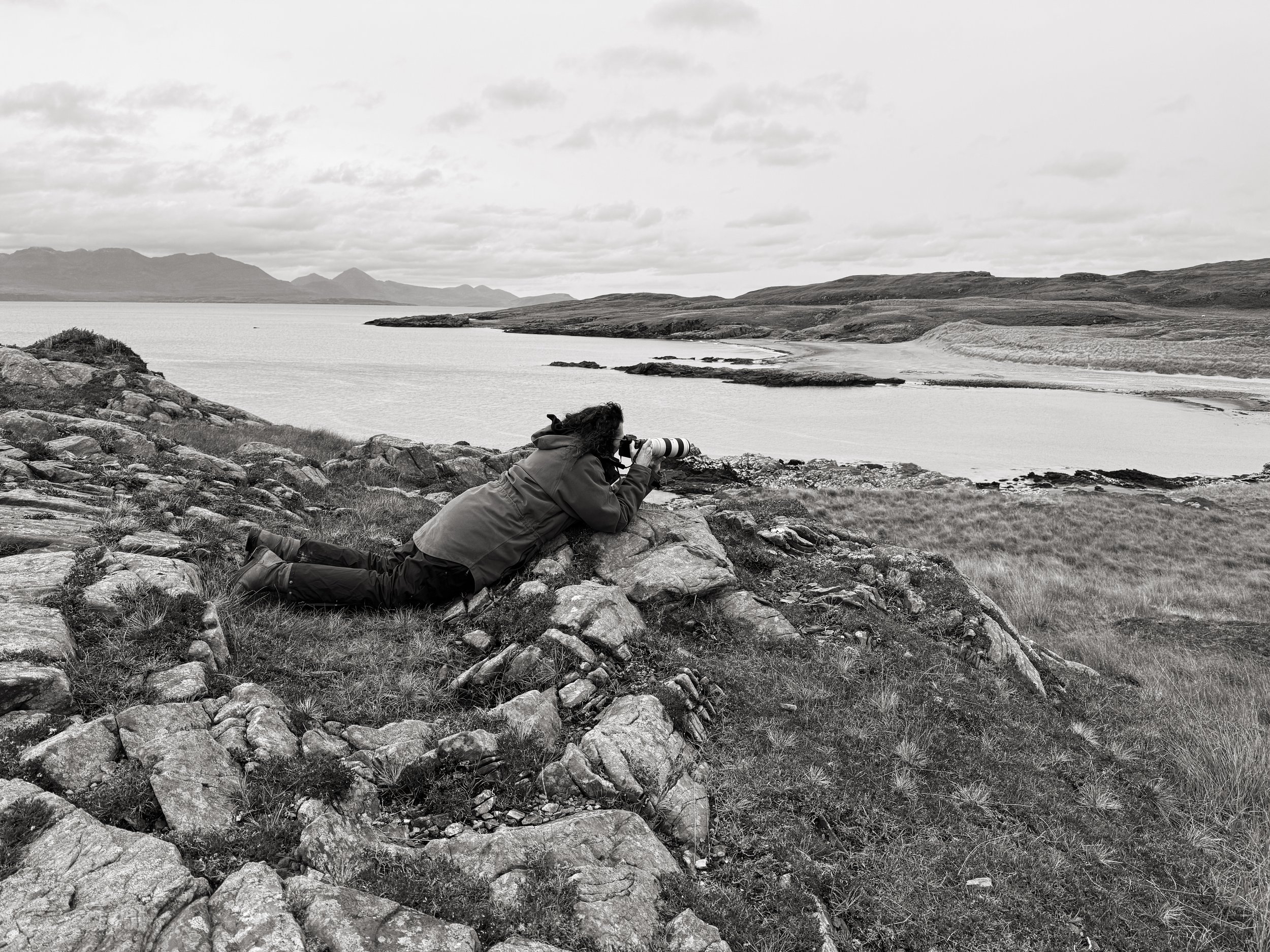
About Esther Towler
PHOTOGRAPHIC ARTIST | RARE NATIVE HORSES AND WILD PLACES they dwell
Esther Towler is a British photographic artist based in the South Pennines. She photographs Britain's rare native horse breeds and the wild places that shaped them, and prints her work by hand in small editions.
She began her career as a police photographer, where precision and objectivity were everything, before spending many years photographing horses and their owners.
Since 2018, she has followed Britain’s native breeds across the country, including a six-year journey for her book Wild Hearts that took her to remote moors, fells and islands. Spending time with these herds in their own places, she came to see how closely the horses and the land depend on each other, and how quickly both are changing.
Native herds are losing the grazing that shaped them, open moor is being fenced and planted, and countryside is being built over. She aims to witness these horses while they still roam free, and to make work that shows why they matter.
Her work has been exhibited nationally and is held in private collections internationally. She studied Photography at university and is a Licentiate of the BIPP and an associate member of Ebor Studio/Gallery.
CURRENT PROJECTS
Horses of Holy Isle (2023 to present)
Three herds of Eriskay ponies living wild on Holy Isle, Scotland, photographed across the seasons, year after year.
Elemental (2026 to 2027)
A year on Saddleworth Moor, following the land through the seasons: fire damage, restoration and the slow changes to open moorland.
PUBLISHED WORK
Wild Hearts: Britain's Rare Native Horses (2025)
A six-year study of Britain's rare native horse breeds, published with the support of the Rare Breeds Survival Trust, to which 10% of every sale is donated. Acknowledged in a letter from His Majesty the King.
SELECTED EXHIBITIONS
2026I Chester Photo Festival Wild Hearts book selected and showcased at the festival
2026I Monochrome Glasgow Gallery of Photography, group show
2026I Pensychnant Conservation & Nature Reserve, juried group show
2025 | Wild Hearts, solo exhibition, Ebor Studios, Littleborough
2025 | Wild Hearts, solo exhibition, A.B Art Gallery, Cheshire
2024 | Women in Photography, Glasgow Gallery of Photography (group)
2024 | Abstraction, PhotoPlace Gallery, Vermont (juried)
2023 | Creative Response to Climate Change, Northlight Gallery, Hebden Bridge
View full exhibition history
Artist statement
For me, one of the most beautiful sights in the world is horses moving freely across open moor, fell and island. I have been a photographer since I was nineteen, but it was horses that gave my work its purpose, and they still bring me back.
Following Britain’s rare native breeds for my book Wild Hearts, I came to understand how closely these horses are bound to their land. The moors, fells and islands where they have grazed for centuries shaped them, and the ponies in turn help shape the land. You cannot protect one without the other.
Both are under pressure. Herds are shrinking as grazing is restricted, open moor is fenced and planted, and the cost of keeping semi-wild ponies rises while fewer people take them on. Around my home in the Pennines, green spaces are being built over. It saddens me to watch Britain’s wild places becoming less, year by year, and that sadness is at the heart of what I make.
My work stays close to particular herds in particular places. Since 2023, I have returned each year to Holy Isle in Scotland to photograph three herds of Eriskay ponies living free on the island. In pieces such as Carneddau Ponies, made in the mountains of north Wales, I try to show a herd as it truly lives: unhurried, together, and at home.
I work slowly. I stand quietly with the horses, often for hours, waiting for the moment when they forget I am there. I have long admired Fay Godwin’s photographs of the British countryside, and the way she used quiet, unsentimental images to speak up for open land. I want my work to do the same for these horses.
I am now printing my photographs by hand, in Van Dyke Brown, in small editions. Its warm, earthy tones feel closer to the true nature of these horses than a standard print ever could, and each print is made with the care these places deserve. I want the work to be quiet, and to let the animals and the land speak for themselves.
I photograph these horses because I love them, and because I know how easily they could disappear. Once a herd leaves the hill or a field is built over, centuries of history go with it, and they do not come back.